How to escape a submerged car in water.

If you find yourself in a car that has gone off road and ended up in a body of water, there are a number of things you should consider before attempting to escape the car. The first thing to remember is – Don’t Panic!
There’s no need to thrash about inside the vehicle just because it is now submerged. One of the most vital things to remember is that you must not open the door. The pressure of the water outside will be far greater than that of the air inside, making it very difficult to open the door against it if you are standing on the opposite side of the car. It’s important to close any windows before opening any doors or attempting to swim out.
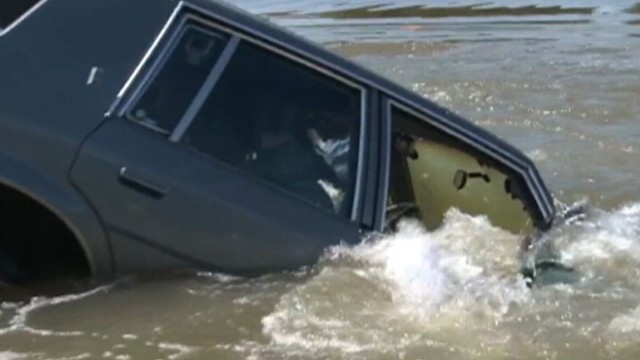
As soon as you see water flooding into the car, take a deep breath and hold it. If you try to fight the natural urge to breathe out with your entire lung capacity, you will be able to stay below the surface of the water for longer.
There is no need to swim or panic just because water has entered the car. Unless the car has been completely submerged, it is unlikely that the water inside will be more than two feet deep. Try opening a window and wait for the pressure to equalise before attempting to open a door or swim out of one.
Once you have surfaced outside the vehicle, take a good breath of air and hold it. Continue taking deep breaths as you swim to safety.
– Don’t open the door; the pressure of the water outside will be far greater than that of the air inside, making it very difficult to open.
– If you are standing on the opposite side of the car, close any windows before opening any doors or attempting to swim out.
– Take a deep breath and hold it as soon as you see water flooding into the car; don’t fight your natural urge to breathe out.
– Unless the car has been completely submerged, it is unlikely that the water inside will be more than two feet deep.
– Swim to safety and take a good breath of air before swimming again.
How to escape a vehicle on fire.
– Once you are aware of the fire, breath shallowly or not at all. This will conserve oxygen and reduce the inhalation of hot gases; this makes it easier to continue breathing for a longer period than if you had taken deep breaths which would rapidly deplete your body’s store of fresh air.
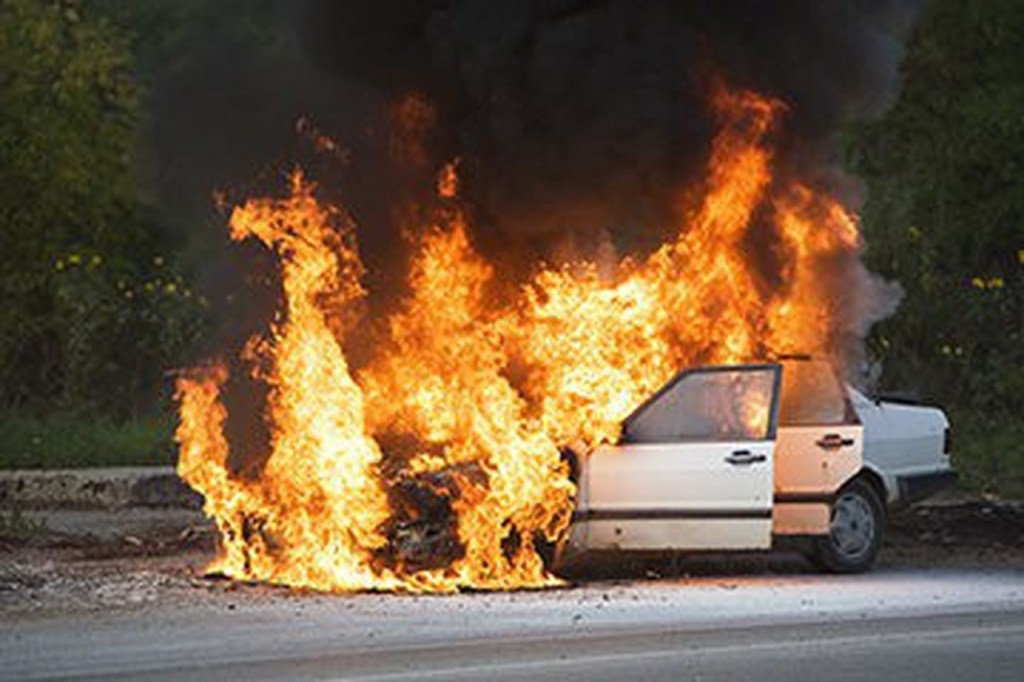
– If possible, open any windows, or use a suitable object to break any glass that is making it difficult for you to escape.
– Remove your seatbelt if possible.
– If it’s too hot to touch the car door handle, tap along the length of the door with your knuckles – if there is no external damage to the vehicle, chances are there will be weak spots in the metal. If it is possible, use these areas to kick out the windows.
– Once you have broken a window, lean away from the opening so that escaping smoke and heat can pass by you on its way out of the vehicle.
– Wait until several seconds after the fire has gone out before attempting to exit. If there appears to be fresh air at the bottom of a door, it will be cooler and more breathable than the inside of the car. Take a few small breaths before attempting to get out of the car.

– Once you have escaped from the car, do not stand near or run back towards it; there may still be burning bits falling from it. If the car is situated on a hillside, or if there are any dry plants or trees nearby, run to safety in case the fire spreads.
If you have a fire blanket, wrap it around your mouth and nose. If there is any water available, use this to douse yourself as you run; avoid using your bare hands as the majority of the heat will be on your skin’s surface and not beneath it.
If you have portable oxygen, use this. If it is not available, you should only breathe pure oxygen for around 30 seconds before taking your next breath of fresh air.
How to stop a vehicle with little or no brakes.

– The driver should brake as hard as possible, without locking the wheels.
– The car may begin to skid; the driver must release the brake pedal and reapply it. If you’re on snow or ice and about to hit an object. Firmly break while turning your wheel away from the object. At the last second release the break which should allow the car to roll away from the object. Repeat if you can.
– Once applied correctly but without effect, the brake pedal should be released and reapplied repeatedly until there is some effect on slowing the vehicle down.
– If this fails, the emergency brake should be used to slow the vehicle before finally stopping.
– Once stopped, place your hazard lights on.
The importance of a dashcam

– A dashcam can be used as evidence to help secure a conviction should you ever need to report an accident.
– The footage might also provide invaluable information about the cause of an accident and whether or not another driver was at fault.
– Dashcams can also record any other incidents on the road such as accidents, near misses or aggressive driving.
– This can provide useful evidence should you ever need to report the incident to the police, even if it does not affect your own vehicle.
– Detailed footage can help with insurance claims by providing valuable evidence about an accident or collision involving another driver who may have been at fault.
What you should do in the event of a road rage incident.

If you are approached by another driver or threatened in any way:
– Do not retaliate, as this will only escalate the situation.
– Avoid eye contact and stay calm.
– If possible, drive to a safe place where you can call the police for help.
– Keep your doors locked and windows closed to prevent access to your car.
– If you can, drive to a police station or somewhere with other people around as quickly as possible and call the police for help.
– Remain in your vehicle until help arrives and stay on the line to emergency services until told it is safe to end the call.
What should you do in a hit and run accident.

If you are involved in a road accident and another vehicle fails to stop hopefully your car is equipped with a dash cam:
– You should immediately call the police on 911.
– If possible, do not touch the other vehicle as this could lead to further charges such as interfering with evidence or wasting police time if it turns out the car was stolen.
– Do not follow the vehicle in an attempt to get its plate number or photos of the car.
– If the other vehicle is approaching again, drive away but continue to report your location.
– Make notes of what happened by drawing a diagram and noting information such as vehicle style and state of damage.
– If possible do not leave the scene where it happened.
– If you can, drive to a safe location and call the police as soon as possible.
– Stay on the line to emergency services until told it is safe to end the call.
 John Que Public