
The Japanese people live on a fragmented archipelago of 6,852 islands. The kanji form of the word “Japan” literally means “pure islands.”
Japan is one of the few countries in the world that is still dominated by an indigenous culture. Over 99% of Japan’s population is ethnically Asian and nearly 98% speak Japanese as their first language.

Japanese is one of the world’s most difficult languages for non-native speakers to learn. It has an extremely complex writing system consisting of three different sets of characters (kanji, hiragana and katakana) each with their own unique set of rules.
At times, the only way to tell male and female apart in Japan is by their hairstlyes. Male hairstyles tend to be shorter with a fringe on top while most Japanese females have long hair. The animals that live in Japan are mostly unique to the country. There are no other wild animals native to Japan. Most of the animals that live there are either domesticated or native to exotic places like China or Korea. Only about 6% of Japan’s people are of Asian origin. The rest are mostly Europeans, Russians, Americans and Australians with a few who come from other parts of Asia like mainland China. The Japanese language does not have any regional variation.

There is nothing particular noteworthy about the flowers in Japan. Mount Fuji is the most popular tourist attraction in Japan. There is only one mushroom that is native to Japan.
There are more than 12,000 different varieties of rice in Japan. Only about 1% of Japanese people eat sushi on a regular basis. There are only about 1,900 different types of restaurants in all of Japan which makes it extremely difficult to find something new to eat. The climate in all parts of Japan is very similar except for the northernmost area where the winters get very cold and snow falls frequently. The history behind tattoo in Japan is very different from the one in the western world. In western culture, tattoos are a form of self-expression and a way to look “cool” among peers. In Japan, however, tattoos were generally associated with punishment or humiliation that was used as a method of criminal control.

The first European to enter Japan was Portuguese explorer Fernao Mendes Pinto who landed on Tanegashima island in 1543. The cleanliness in Japan is much different from western countries. In the west, it is common for people to hang their clothes on door frames and walls to dry or store them somewhere so that they can be easily reached. In Japan, however, clothes were hung on clotheslines in public buildings like schools and temples.
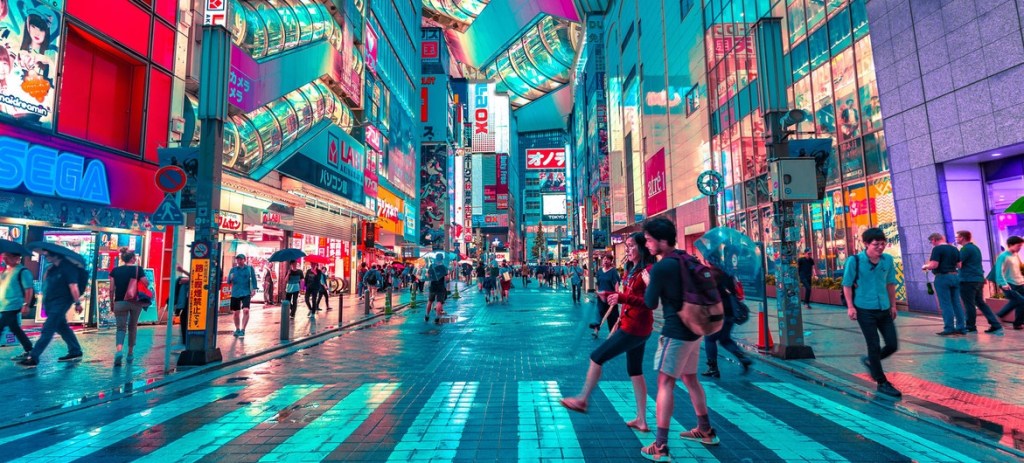
The Japanese people eat a lot of raw fish. In fact, raw fish is often considered a delicacy. However, there is a high risk of contracting bacterial infections from eating raw fish or other seafood that have been undercooked or not cooked enough. The death rate of babies born in Japan is about the same as that in western countries. The laws in Japan are very similar to those in the United States. Japan was the first nation in Asia to introduce online voting for presidential elections. Japan’s capital Tokyo is the only place in the world where traffic lights are replaced by stationary yellow lights at some intersections even on holidays.
The Japanese people drink a lot of green tea, especially on hot summer days. Only about 2% of Japanese people live in rural areas while over 90% live in urban areas. Japan has one of the highest homicide rates of any country in the world. Green tea drinking is one of the most common characteristics of Japanese people.
The word for foreigner (gaijin) literally means “outside person” in Japanese. The Japanese government has enacted very strict immigration laws that make it difficult for foreigners to live there permanently. The Japanese use an opt-out system for organ donation rather than an opt-in system that is used by countries like the United States. This means that the donors must contact the relevant authorities if they do not want their organs donated after death. There’s a high rate of single men and women in Japan. In fact, there is one male for every three females. Only 12% of Japanese people are married while the rest are mostly single or divorced.
The Japanese are very focused on tradition and honor. Therefore, there is a high rate of suicide in the country among young, middle-aged and elderly males. Around 80% of Japanese people believe in angels while only about 10% of the population acknowledges that they actually exist. The Japanese have more mail addresses than telephone numbers. This is because people often answer the phone at home or work but then leave to visit friends or family. People call on their cell phones instead of writing letters.
There are some pretty weird food combinations in Japan including some made out of rice balls, fish cakes and even octopus. Only about 2% of all Japanese students attend school without wearing their uniforms. The phrase “one size fits all” does not really apply in Japan since most Japanese clothing tends to be small-sized. The sucide rate in Japan is much lower than in other western countries. The population of Tokyo is greater than that of New York City. Four out of every five babies born in Japan are not a single baby boy. In fact, there is a greater percentage of girls born in Japan than boys.
The Japanese have the longest working hours among all the countries in the world. Ten hours have been added to their working days for reasons including things like late night karaoke sessions and pre-dawn wake-up calls from their kids. The crime rate of Japan is very low. The crime rate in Japan has lowered despite the fact that the population has increased. The Japanese are punctual when it comes to public transportation services.
Most Japanese people live in apartments rather than houses. This is because most people choose to live closer to work or school rather than in a house or a park where there is a greater risk of being robbed. There are a large number of wealthy people in Japan. This is because there are a lot of luxury cars and other expensive items that can be purchased from Japan. In fact, the country is home to the world’s largest car manufacturer, Nissan. The water that springs from Mount Fuji in Japan is considered to be healthy for people to drink even though it was once thought to contain deadly bacteria.
In all parts of the world, men tend to dominate politics while women dominate things like sports and culture. High fashion is also considered a masculine activity. However, in Japan, women are often more successful in high-fashion areas like make up. Because of this, there are very few male models in Japan. The average age of the Japanese population is higher than that of other western countries. This is because the traditional Japanese diet that consists mainly of noodles and rice does not give women enough energy to have children soon after marriage while it does help men have children early on in life. The Japanese people are often sensitive to eye contact, especially during conversations. However, they tend to make constant eye contact with babies, younger children and pets. About 70% of food products in Japan are imported. The population of Japan is shrinking rather than rising. The reason for this is the reluctance of senior citizens to give birth to children that will eventually take care of them when they get old.
More than 80% of the Japanese people living around Mount Fuji drink bottled natural mineral water from the mountain each day. Aftican Americans living in Japan are mostly concentrated in cities like Yokohama, Nagoya and Osaka. Most Japanese people live in small apartments. This is because there are many single people living in Japan. Senior citizens prefer living with their children even when they get older. The Japanese like to eat their main meal at dinner time around 6 to 7 p.m. They also like to drink beer after their meals. Interacial marriages between people of different races and cultures are increasing in Japan.
The Homeless population and the elderly
During Japanese Prime Minister Shinzo Abe’s first term as Prime Minister in 2006, homeless people were over represented in the national statistics. In the municipalized areas of the major cities, “the failure to provide adequate housing for individuals who have been living on the street for an extended period of time is not only a failure to solve a problem, but also a political embarrassment.”In 2006, there was a government study that ran from April 1st 2006 to March 31st 2007 and indicated that there were 596,000 homeless people in Japan. In conclusion , it was found that of the 596,000_ homeless, 84% had some form_ of mental illness. The study did not include people under twenty-five years old, but between twenty-five and fifty years old, there were more than one hundred thousand people without homes. Of the total number of people in Japan that are homeless or on the streets, eighty percent are men. The Japanese military is known for its “stringent recruitment standards” but it has been found that the soldiers are still susceptible to mental illness. It has also been found that eighty percent of the mentally ill men in the Japanese military are living on the street or in substandard housing.
 John Que Public